Vale
My work on hydrological and hydraulic analysis was carried out in the context of large-scale mining infrastructure projects for VALE, primarily involving tailings piles and dams in the Quadrilátero Ferrífero region. The analyses supported safety assessments and the design and verification of drainage and hydraulic systems across multiple operational sites.
I participated in studies for structures located mainly at the Fazendão and Feijão mines, as well as within the Itabira complex, addressing both existing conditions and future expansion scenarios. The work combined basin-scale hydrology with detailed hydraulic verification of channels, culverts, spillways, and drainage systems associated with piles and dams.
Hydrological modeling was developed using GIS to delineate contributing catchments and characterize physical basin parameters, followed by rainfall–runoff simulations in HEC-HMS to estimate design flows under different return periods. Hydraulic behavior of existing and proposed infrastructure was then evaluated in HEC-RAS, allowing verification of conveyance capacity, freeboard, and flow regimes under current and projected conditions. Engineering drawings and layouts were prepared in AutoCAD to support technical documentation and design coordination.
As part of this work, I developed a discretized implementation of the Huff method for temporal rainfall distribution, structured to support consistent application across multiple scenarios and study areas.
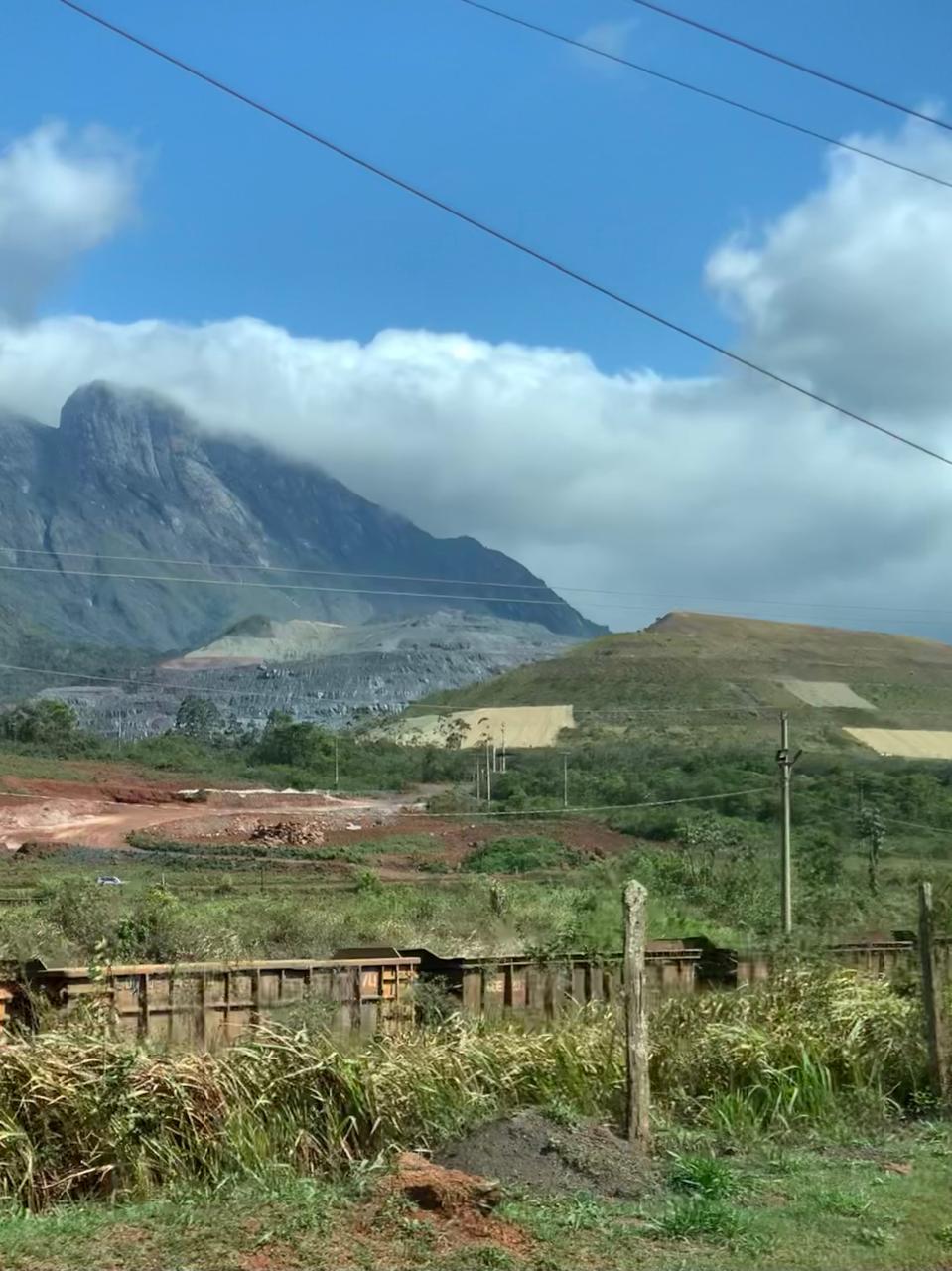
The work also included field inspections, notably at PDE IV, a tailings pile at Fazendão, where on-site observations were used to validate assumptions related to drainage patterns, contributing areas, and existing hydraulic structures. These visits were essential in closing the loop between model-based analysis and real operating conditions.
Due to confidentiality constraints, project models and detailed results cannot be publicly shared. Nevertheless, the experience was formative in consolidating my understanding of hydrology and hydraulics as system-level problems, where modeling choices, data quality, and spatial interpretation directly influence engineering decisions and safety outcomes.