TIC Sorocaba Intercity Train
The Trem Intercidades (TIC) Sorocaba project was developed as a feasibility study within the State of São Paulo's urban mobility program to assess the technical and economic viability of a new intercity rail connection between São Paulo and Sorocaba. The study required early design decisions to be grounded in realistic quantities, interfaces, and constraints, while remaining flexible enough for iteration at the pre-concession stage. I worked on the project at DB Engineering & Consulting, where I was responsible for BIM coordination and project management, as well as selected modeling activities.
From the outset, the study was structured around the idea that geometry, quantities, and territorial constraints should be evaluated together. For this reason, an integrated GIS–BIM approach was adopted, in which spatial context and engineering models were developed in parallel rather than sequentially.
Integrated modeling approach
A federated model was assembled by integrating:
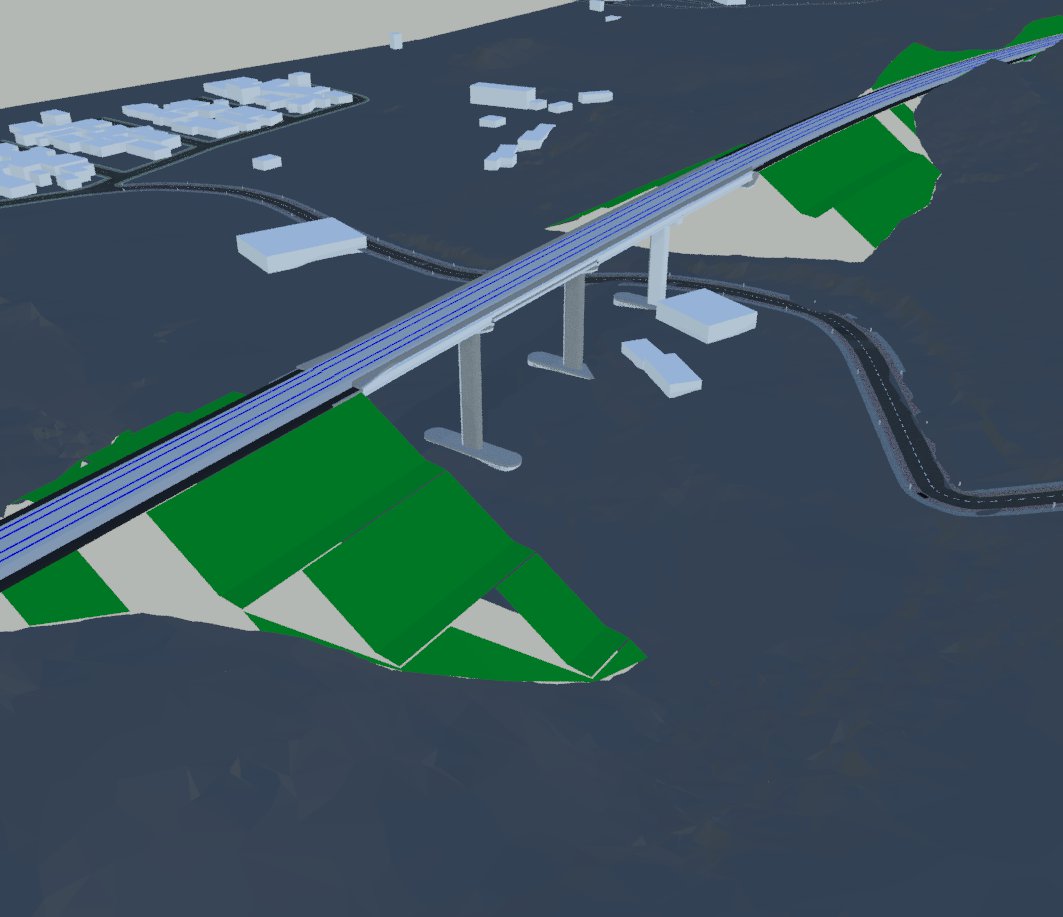
- the rail alignment, including bridges and viaducts,
- station models developed at feasibility level,
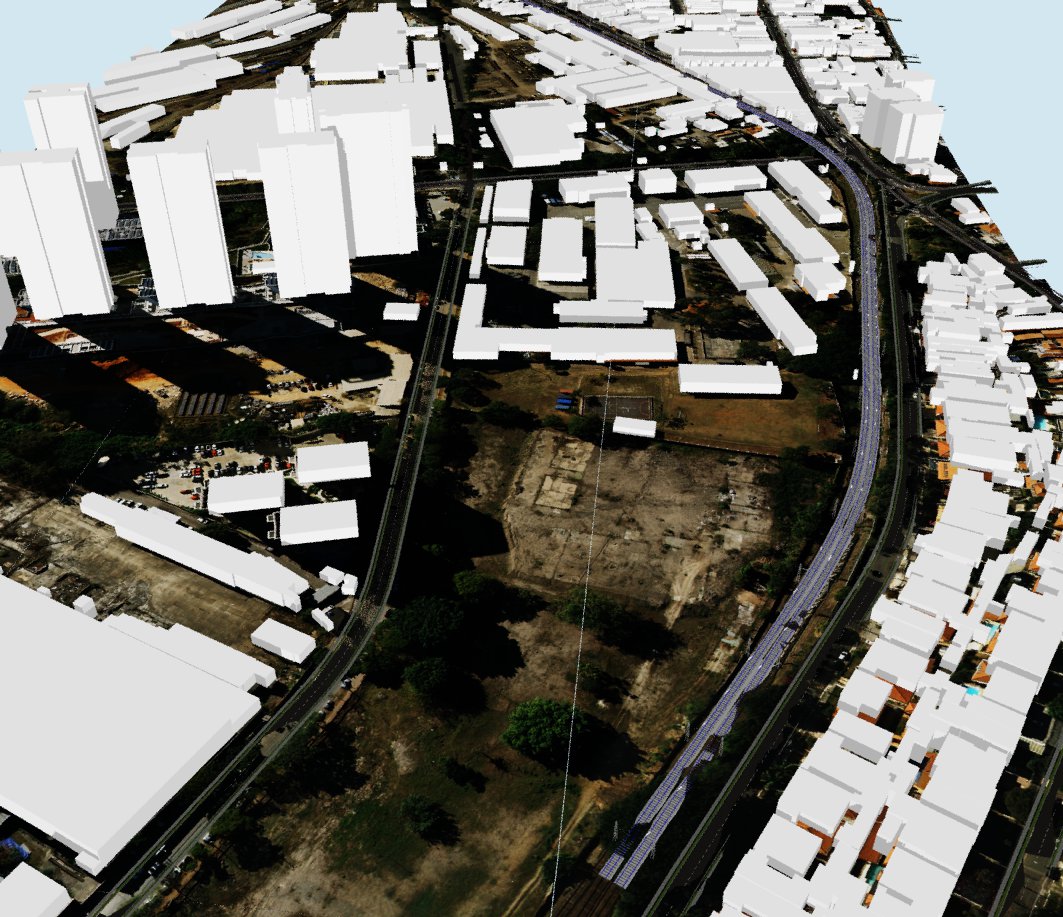
- and an existing conditions model derived from GIS data.
GIS datasets were used to define territorial constraints such as right-of-way limits, urban interfaces, and existing infrastructure. These constraints were connected to the BIM environment to assess geometric consistency, identify potential clashes, and validate alignment decisions against real spatial conditions.
The resulting model supported quantity extraction and preliminary CAPEX estimation, allowing economic implications to be evaluated alongside technical assumptions. For example, it was possible to estimate geotechnical works, including cut and fill volumes. By maintaining a direct link between alignment choices, modeled elements, and quantities, the study preserved traceability between design decisions and cost outputs throughout the feasibility phase.
Collaboration infrastructure
To support multi-party collaboration throughout the project, a Common Data Environment (CDE) was established using Autodesk Construction Cloud (ACC). The CDE provided the necessary framework for controlled collaboration, versioning, and consistency across disciplines and organizations.